


Portraits of Spirituals: A Community Quilt at the Boston Children’s Museum
Updated: Jan 16

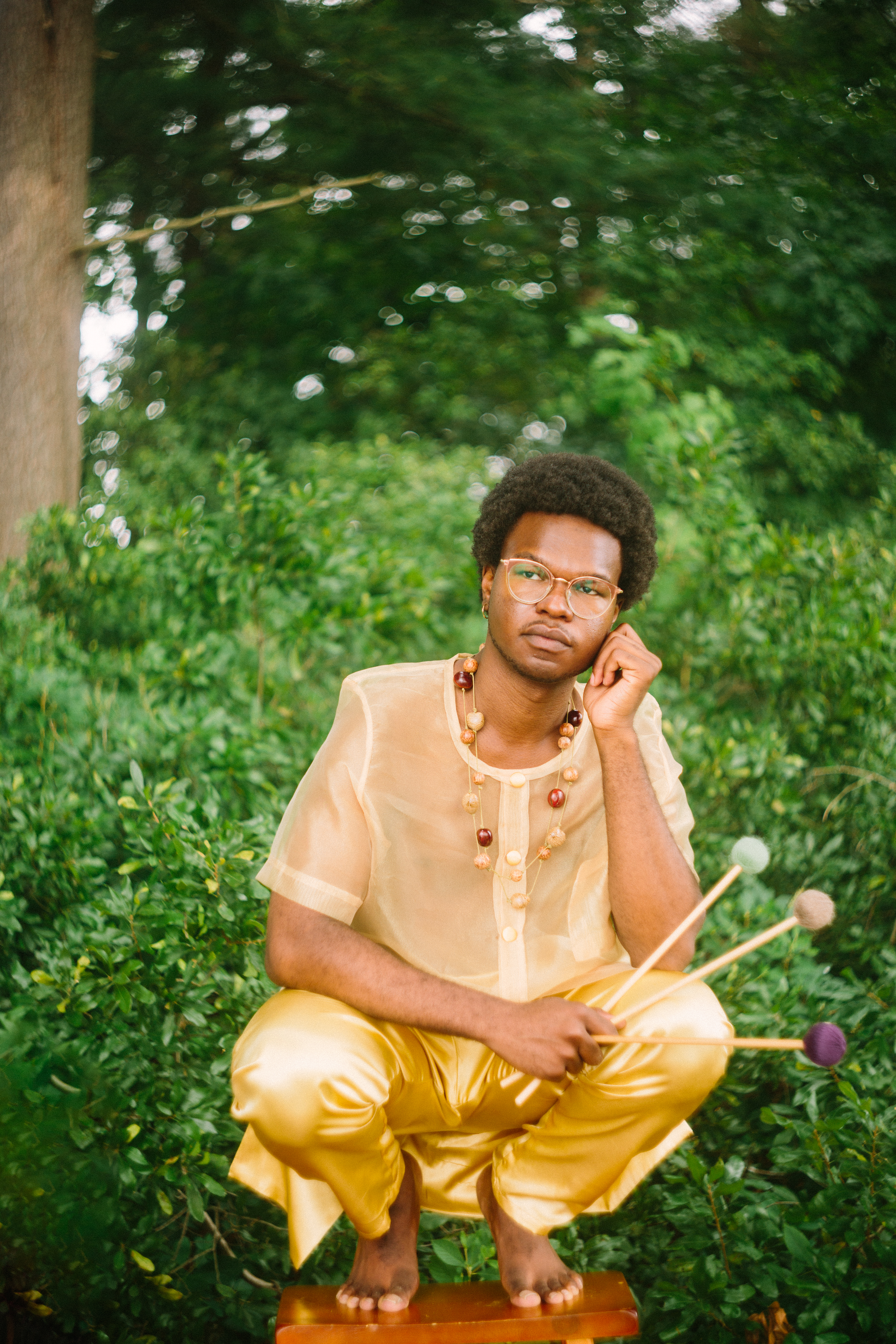
In January 2022, Taylor McTootle, the former Director of Education at Castle of our Skins, approached me to develop an Edu-tainment program that showcases the marimba alongside Black history and culture. It was my first time designing a COOS Edu-tainment program and it was important to me that young people learn about the music and culture of early Africans in America, particularly spirituals and their involvement in self-emancipation. I also wanted the program to be engaging for a broad age group, so I thought of an activity many people would enjoy — painting! I was just getting into adult-coloring books myself, so painting/coloring/drawing was already on my mind. It was a skip and a hop to come to the idea that participants would paint their own piece of a community quilt while I performed arrangements of spirituals and discussed their coded language and symbology. The quilt-making activity would connect to the rich African American quilting tradition and the quilt codes that have been said to have been used along the Underground Railroad. Though many scholars and quilters challenge the existence of these coded quilts, the folklore still resonates with me. I hoped people walked away with a sonic, tactile, and educational impression of early African American culture and multiple strategies early African Americans used to liberate themselves.
On December 6th and 8th of 2024, Boston Children’s Museum hosted the first iterations of the program. Throughout the workshop, children were prompted to reflect on their own identity, culture, family, interests, religion, place of origin, and dreams for the future. They also learned about the symbols and coded language in various spirituals and the codes perhaps used on quilts along the Underground Railroad. Using Crayola fabric markers, they expressed these ideas and more on their quilt squares. From these initial two iterations, a wonderful partnership formed and we planned to host a series of Portraits of Spirituals throughout the summer of 2025 at the museum. Over the next several months, Mona Baloch (Religious Literacy Learning & Engagement Program Coordinator, Boston Children’s Museum), Lessie Tyson (Arts and Social Impact Educator, Boston Children’s Museum), Ruben McFarlane (Director of Community Engagement and Partnerships, Castle of our Skins) and I worked together to tailor the program to the age range of the museum’s summer camp program, which is five to seven. We devised the plan to collect the squares throughout the summer (absent a strong objection by its creator) to build a community quilt that the museum could have and display — an artifact created mostly by the youth. In order to tailor the program, I was challenged to arrange more music for the marimba (to decrease the time spent talking) and to find powerful images to replace paragraphs of text in the PowerPoint presentation. Out of this development process came a new medley of the spirituals “Wade in the Water,” "Hold On," “Sometimes I Feel Like A Motherless Child,” and “Swing Low, Sweet Chariot.” These paired with my existing arrangement of “Deep River,” and music inspired by spirituals — either through direct quotation, as in my piece “I go to prepare a place for you,” or the second movement of Florence Price’s Sonata in E minor for piano, where the main melody, while original, is reminiscent of a spiritual in its use of a pentatonic scale and a melodic contour that hinges on pendulating thirds. After the first program of the series on June 27, 2025, it was clear that the community quilt would be full of symbols and larger than we anticipated — both very exciting realizations.
Mona Baloch from the Boston Children’s Museum had these reflections:
“Portraits of Spirituals at Boston Children’s Museum is part of our Religious Literacy initiative, which aims to support children, families, caregivers, staff, and practitioners of all belief backgrounds — religious, spiritual, non-religious/secular, or questioning — to engage with topics that affect children’s identity development and well-being. In this program, visitors and staff engaged with concepts and traditions related to spirituality and beliefs in a variety of ways – through music, visuals, conversation, and hands-on creation. This collaboration with COOS has been particularly meaningful because of the deep roots it has built, not only through repeated programming at the Museum but also through the creation of our Community Quilt, made up of quilt squares created by the children and Museum staff who participated in this program series, serving as an opportunity for continued learning and connection.”
A common motif that appears throughout the community quilt are rainbows, which many people shared represented feelings of joy and hopefulness. Another prominent motif is water, likely inspired by discussion about the spirituals “Wade in the Water” and “Deep River.” You will also see cultural symbols like the Sankofa bird, an Akan Andinkra symbol which depicts a bird with its head turned backward. Sankofa is a Twi word from the Akan people of Ghana that translates to “go back and get it.” You will see bold colors, depictions of the sun, neighborhoods, and Underground Railroad-quilt symbols. You will see flags of the Dominican Republic, Ireland, and the United States of America, markers of the national and cultural identity of the creator of that particular quilt square. Each individual made dozens of choices that affected the final quilt: what colors to use, how much of the square to fill, placement, thickness of lines, and design. “All of these, and more, combine in almost infinite variety in the mind and hands of the quilter.” (National Museum of African American History & Culture).
In other workshops, the makers of the quilt were spread across a wider age range. In a workshop held on May 18, 2024 at Mayo Street Arts (Portland,ME) a young girl, perhaps aged 5-7, created a graphic representation of the music she heard. When she confidently volunteered to share about her design during the group reflection, I was amazed that I could clearly see where “Deep River,” or “Sometimes I Feel Like A Motherless Child” were positioned on her quilt square. There was so much clarity in her artwork. At the end of the workshop, she improvised on the marimba and played textures that, to me, sounded like water. After she was finished, I asked her if her improvisation was inspired by anything. She said she was inspired by rivers.
In that same workshop, an elder, aged 60-70 was there alone. She had attended my solo concert, like flower petals…, the night before and came back the next morning for the workshop. She brought a bag of dried flowers with her as a gift to the quilt we were making. In the group reflection, she shared that her mother, a quilt maker, had recently passed away, and that the youthful experience of creating a piece of a DIY community quilt felt cathartic. She created her quilt square in honor of her mother.
Another Portlander with family ties to Costa Rica and Brazil shared about how the history of spirituals reminded him of the music his enslaved ancestors in Brazil used to protest and preserve their African culture. These stories from Portland underscore the program’s ability to foster connections, cultural curiosity, and creativity, through interactive education and thought-provoking performance.
My partnership with Castle of our Skins as a teaching artist dates back to March 17th, 2022, when I presented my first Deep-Dive lecture on the spiritual “Deep River” to musiConnects students. “Deep River” remains part of my story as a COOS teaching artist — with the rivers now depicted all over a community quilt, a legacy piece held by the Boston Children’s Museum. The museum will host an opening celebration and reveal of the quilt on January 19, 2026 at 11:00 am in honor of Dr. Martin Luther King, Jr Day. The quilt is both a tribute to early African American culture and a mirror for the youth of our city, reflecting parts of their identity back to them. It is an immense joy and honor to have been involved in its creation.


I appreciate how you acknowledge that scholars and quilters dispute the coded-quilt narrative while still choosing to let the folklore resonate. That honesty seems important when teaching children, since it models how history and legend can be held together without pretending they are the same thing. I wonder how you navigated that distinction with five-to-seven-year-olds during the workshops, and whether the quilt squares ended up reflecting the symbols themselves or the children's own identities more strongly.
Useful reference: https://animebreaker.org/
Entering two names into Love tester gives you a match score. The results can be funny or surprising, and the game is a great way to relax and have fun with friends.
The idea of turning individual quilt squares into a larger community piece really stayed with me. I especially liked the story about the young girl who created artwork inspired by the rivers she heard in the music, because it shows how children can interpret history and sound in surprisingly personal ways. The elder who made her square in memory of her mother added another layer that I found touching. It’s interesting how the same workshop could mean something completely different to people of different ages and backgrounds. The repeated symbols, like water and rainbows, also make the finished quilt feel like a collection of many individual stories. Even Help with Last minute Assignment can sometimes lead to unexpected personal connections.
Excelente publicación, especialmente por la manera sencilla de presentar el tema. la cábala de los sueños resulta interesante para quienes sienten curiosidad por comprender mejor los símbolos y mensajes que pueden aparecer durante el descanso.
Greate post